Vemira
7 Things You Didn’t Know About the Su-35 – Russia’s Most Advanced Fighter Jet Revealed
The Su-35 is one of the most advanced combat aircraft in the Russian arsenal and is often described as a “4.5-generation” fighter due to its impressive technology, which nearly reaches fifth-generation capabilities. But behind its dramatic appearance lie several surprising and lesser-known details that most people are unaware of. Here are seven fascinating facts that will surprise even aviation enthusiasts.
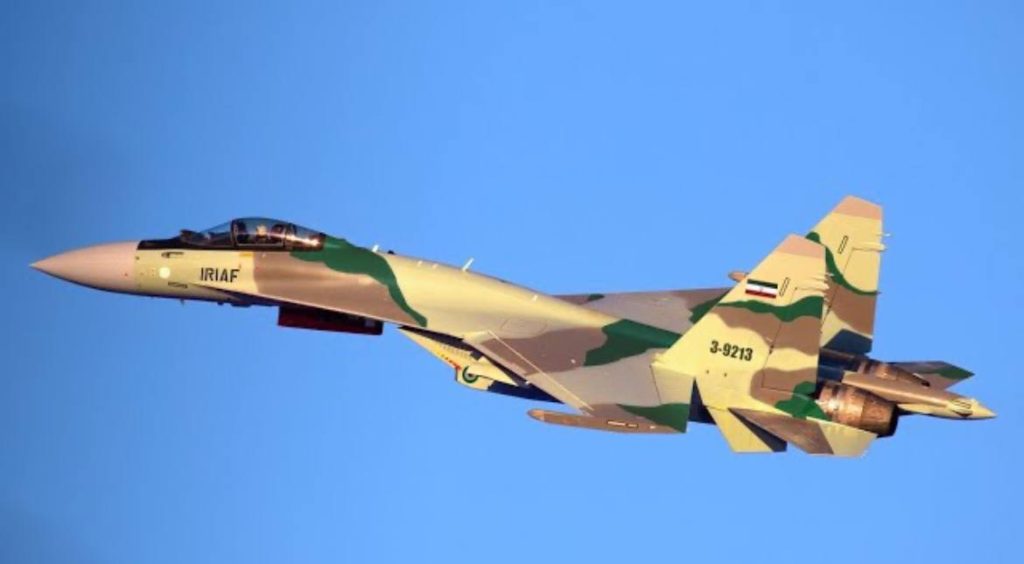 Вячеслав Грушников, CC0, via Wikimedia Commons
The Su-35 is one of the most advanced combat aircraft in the Russian arsenal and is often described as a “4.5-generation” fighter due to its impressive technology, which nearly reaches fifth-generation capabilities. But behind its dramatic appearance lie several surprising and lesser-known details that most people are unaware of. Here are seven fascinating facts that will surprise even aviation enthusiasts.
#1: The Su-35 Is a Deeply Modified Version of the Su-27
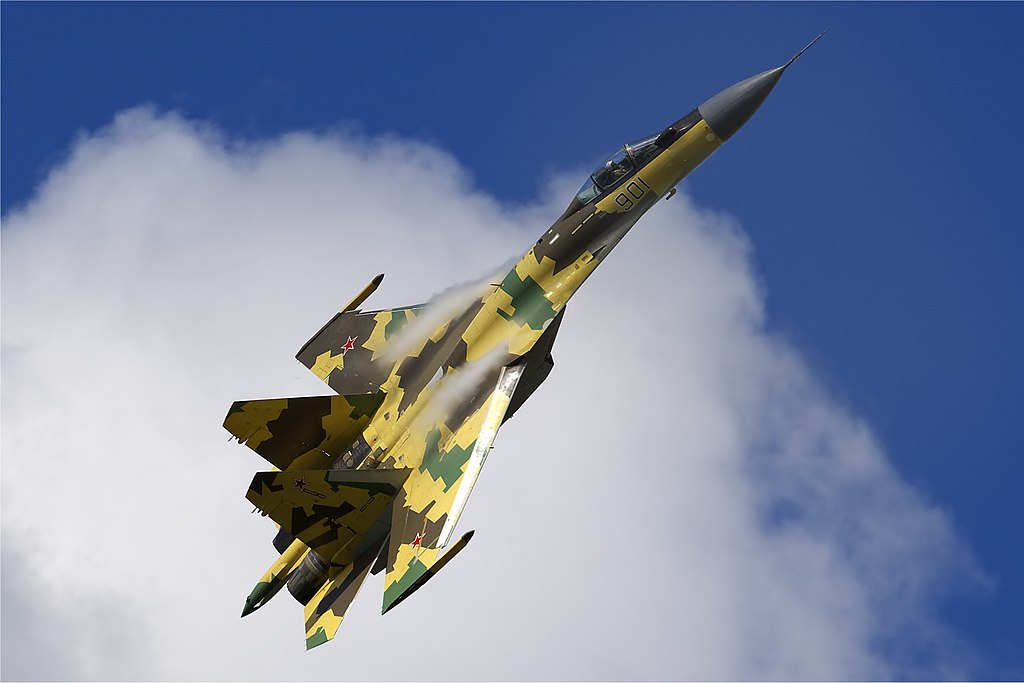
Although the Su-35 looks like a modern fighter jet, it’s actually an evolution of the Su-27 from the 1980s. It builds on a proven design but has been upgraded with modern technology, new avionics, and more powerful engines—all without radically altering the basic structure.
![]()
Läs också:
#2: It Has Thrust Vectoring – and Can Fly Backwards
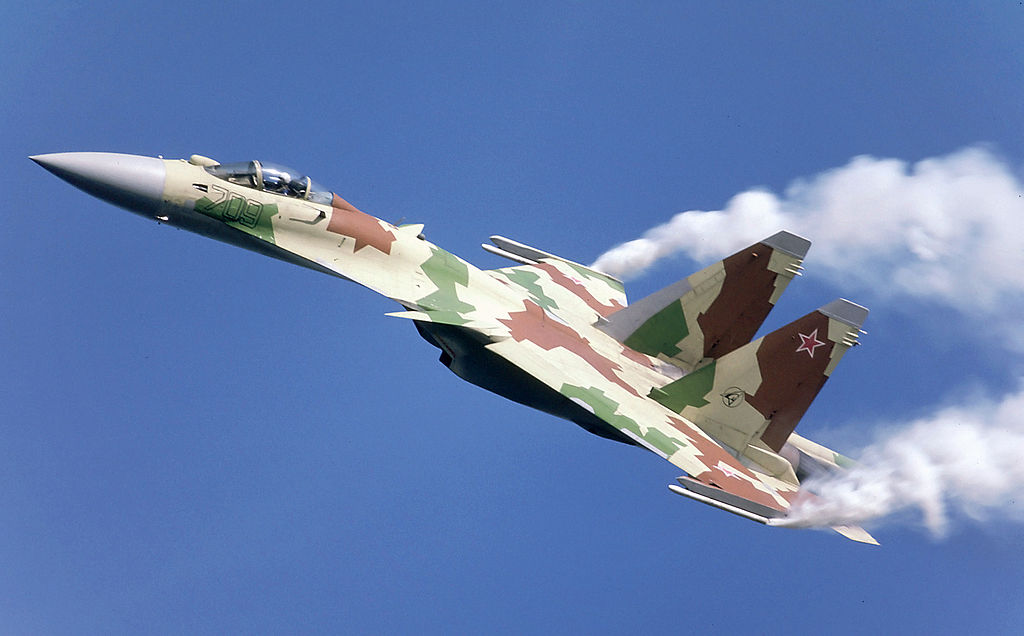 Rob Schleiffert, CC BY-SA 2.0 via Wikimedia Commons
The Su-35 is equipped with thrust vectoring engines, meaning the exhaust can be directed in multiple directions. This gives the aircraft extreme agility and allows it to perform maneuvers like the “Cobra maneuver”—and in some cases, it can almost fly backwards in the air, which is useful in close air combat (dogfights).
#3: The Cockpit Is Designed with Usability in Mind
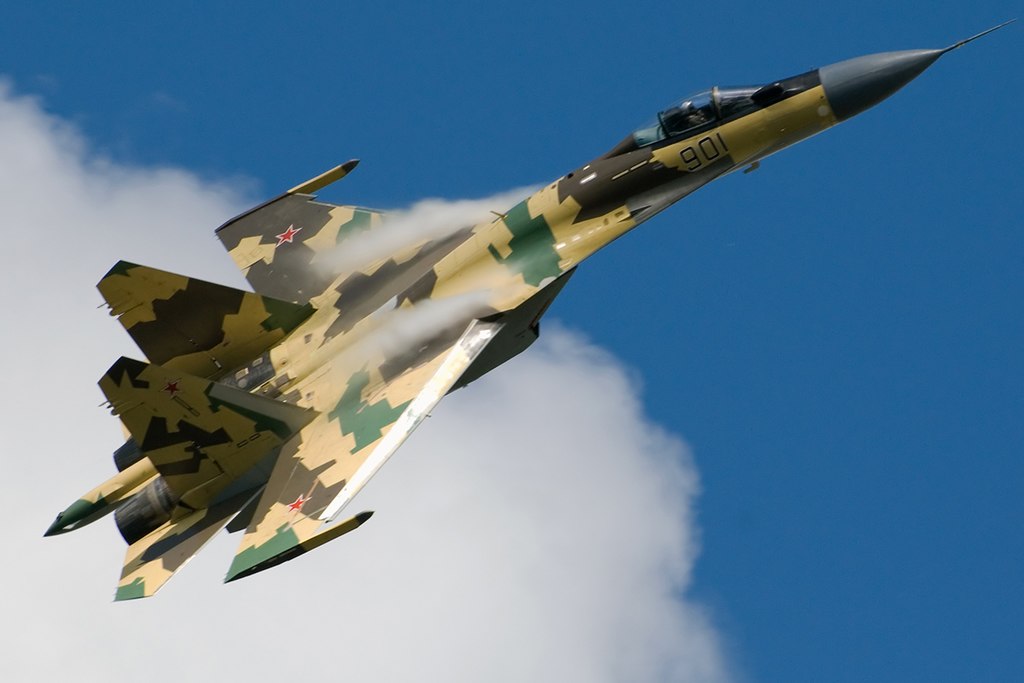 English: Aleksandr MarkinРусский: Александр Маркин, CC BY-SA 2.0 via Wikimedia Commons
Unlike many older Russian fighter jets, the Su-35 features a digital “glass cockpit” with four large LCD screens. This makes it easier for the pilot to manage and operate the many systems during combat and navigation. It marks a major shift from the more manual, analog setups of earlier generations.
#4: It Can Engage Over 30 Targets at Once
 Dmitry Terekhov from Odintsovo, Russian Federation, CC BY-SA 2.0 via Wikimedia Commons
The Su-35’s radar—called Irbis-E—is extremely powerful and can track up to 30 airborne targets simultaneously while actively engaging up to 8 of them. This makes the aircraft a threat in both air-to-air and air-to-ground scenarios and gives the pilot superior situational awareness.
#5: The Su-35 Is Also Used as an Export Showcase
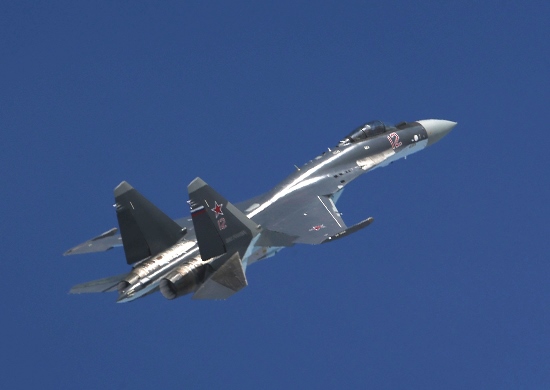 Mil.ru, CC BY 4.0 via Wikimedia Commons
Russia has used the Su-35 as a “showcase” model to attract foreign buyers, including China and Egypt. It’s not just a combat aircraft, but also a tool of diplomacy intended to highlight Russian technology and strengthen international relations through arms exports.
#6: It Has a Hidden Electronic Warfare Capability
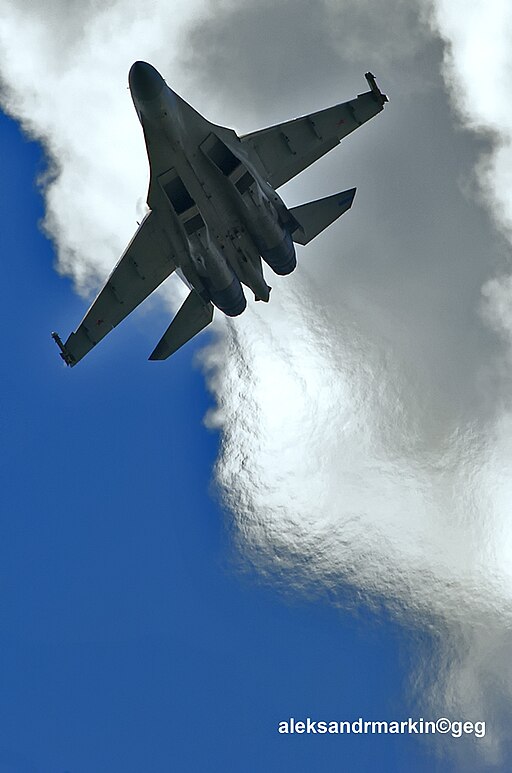 English: Aleksandr MarkinРусский: Александр Маркин, CC BY-SA 2.0 via Wikimedia Commons
Many people assume the Su-35 is just a traditional fighter, but it’s actually equipped with advanced electronic warfare systems, including jamming and radar deception. The aircraft can disrupt enemy radars and missile guidance systems, making it significantly harder to shoot down.
#7: The Su-35 Has Never Been in a Full Aerial Battle Against the West
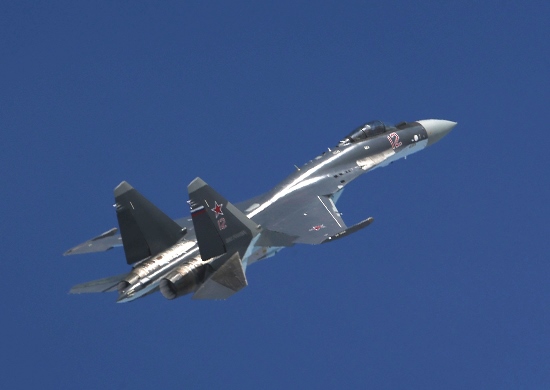 Mil.ru, CC BY 4.0 via Wikimedia Commons
Despite its high profile and widespread hype, the Su-35 has yet to face Western aircraft like the F-22 or Eurofighter Typhoon in direct air-to-air combat. That means much of its reputation is based on exercises and theoretical comparisons—and its actual performance in battle remains untested in that context.
Vårt team kan ha använt AI för att assistera vid skapandet av detta innehåll, som har granskats av redaktörerna..
![]()
Läs också: